
USCF State Release Destinations
A person leaving Utah State Correctional Facility may enter parole, move to a community correctional center, transfer to another authority, or reach expiration or termination of the sentence. Parole is conditional release from prison while UDC Adult Probation and Parole and the Utah Board of Pardons and Parole retain authority. A community correctional center is a structured placement. Neither status is the same as an unrestricted end to all correctional control.
UDC says people paroling to a community correctional center are transported there. Other released clients may leave with an approved ride or receive case-specific help to reach a nearby UTA TRAX station. The destination should be verified from the person's current UDC status, Board order, and release record. A family should not infer the destination from the fact that the person is no longer housed in a prison unit.
| USCF departure | Meaning | Best record |
|---|---|---|
| Parole | Prison ends, state supervision continues | Board order and UDC status |
| Community center | Structured UDC placement | UDC housing and release record |
| Transfer | Custody continues elsewhere | Movement entry and receiving agency |
| Expiration or termination | Specified sentence authority ends | Final Board or UDC record |
Confirm a USCF Release
The UDC Offender Search covers people currently under UDC supervision. That includes prisoners, parolees, and probationers. Search by first and last name, with at least one letter in each field, or use the UDC offender number. Open the closest result and compare the name, offender number, legal status, housing, and available case information.
- Search UDC and read the legal status. “Parolee” means the person left prison but remains under state supervision.
- Search the Board Hearings and Decisions system by name or offender number. Read the signed decision and any later order.
- Compare the parole or expiration date, sentencing court, case number, and housing fields. A future date can change.
- If no current UDC result appears, request the release, termination, or expiration record from UDC. Fully discharged people can leave the current-supervision search.
The Kane County released-inmate lookup explains how to reconcile state results with the Kane County case and court disposition. Do not use Kane County Jail's inmate-information page for a state-prison release.
UDC's public field list adds useful identity checks. Compare date of birth, sentencing court, sentencing date, case number, offenses, and sentence length where shown. A housing field can distinguish prison confinement, county contract placement, and a community location. Never rely on the name alone when the result may belong to someone else.
USCF Release Records Contact
UDC distinguishes public status facts from underlying documents. Its public-information list can include date of birth, legal status, UDC number, housing, offenses and sentence, Board hearing date, parole or expiration date, sentencing court, case number, and a prison photograph. A written GRAMA request is the right path for the actual release, termination, or expiration record.
Utah State Correctional Facility1480 N. 8000 W.
Salt Lake City, UT 84116
Operator: Utah Department of Corrections
Release date verification: UDC Offender Search and Board records
Use the UDC Media and Public Information route for records guidance. Give the person's full name, UDC number, relevant date range, Kane County court case, and the exact item sought. Examples include the parole order, prison release date, termination or expiration entry, and release destination. Asking for a specific existing document is more useful than asking for every record about a person.
If the Board search lacks a decision, call its records and search help line at 801-261-6464 or submit the Board GRAMA form. Ask for the final order plus any later modification, rescission, revocation, or termination order. An older decision may have been replaced.
Utah GRAMA permits an agency to classify or redact private, controlled, protected, and security-sensitive material. A denial does not make the public facts false, and a public status screen does not make the whole correctional file open. If proof is needed, request the narrow existing record and keep the submitted request, response, and released file together.
USCF Tuesday Release Processing
The UDC release-day instructions state that paroles and releases are processed each Tuesday and that most are completed at Utah State Correctional Facility. This schedule is a state-prison practice. It must not be applied to Kane County Jail or to a person whose Board order has not yet become effective.
UDC tells families to verify the release or parole date with its offender search or the Board. People without rides are released last, and a release-team member or volunteer may take them to a nearby TRAX station. Those details are case specific. They do not establish the exact hour for one person.
The official UDC page shows the state release framework:
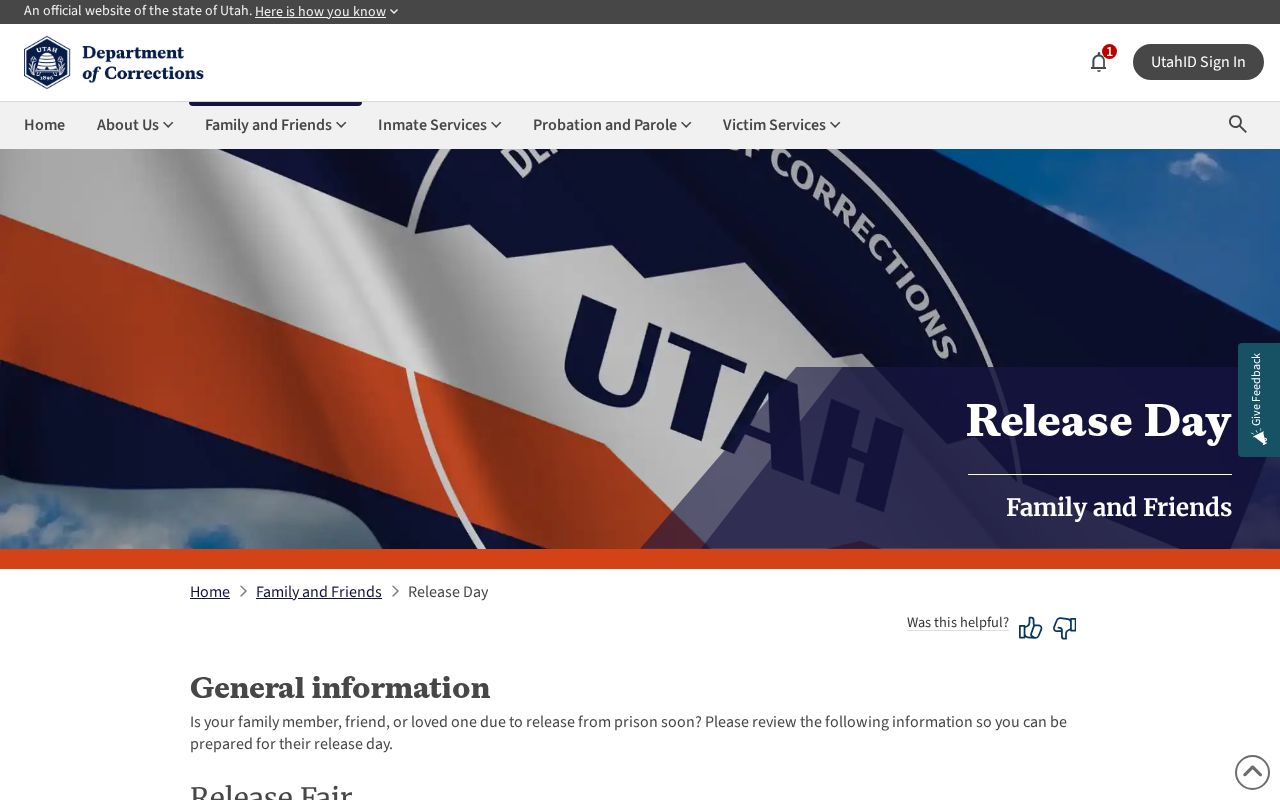
This state source is the correct place to check broad release-day routing, while the person's own UDC and Board records control the actual date and status.
Note: A scheduled Tuesday is not a guarantee; a new order, hold, rescission, or processing issue can change the result.
USCF County-Bed Releases
UDC may house a state prisoner in a participating county jail. The building does not change the legal status. UDC says almost everyone serving a UDC sentence in a county jail still processes release through Utah State Correctional Facility. A direct release from the county building is described as extremely rare, with family notice when it applies.
This distinction matters in Kane County. No official source reviewed verified current Kane participation in the UDC county-jail contract program. If a UDC search ever lists a county jail as housing, call that jail only for immediate physical-location questions. Use UDC and Board records for legal status, parole date, and final release authority.
A move from Kane County Jail into UDC can appear to be a local release because the person left the county building. It is actually a transfer into state custody. The Kane movement entry should name UDC as the destination, and the UDC record should then establish housing and status.
USCF Parole Date Records
Utah's public term is “Parole/Expiration Date,” not a universal projected release date. Utah uses an indeterminate state-prison framework for many sentences. The court imposes a lawful range, while the Board makes the release decision within that framework. A Board-ordered future parole date can still be tentative until all legal and administrative conditions are met.
Read the Board order itself. A hearing listing shows that a matter is scheduled, not that release was granted. A decision can set a date, deny parole, order more review, or impose conditions. Later rescission or violation action can replace an earlier result. Compare all published decisions in date order.
- Parole
- Conditional release from prison while the state sentence continues under supervision.
- Rescission
- Board action withdrawing or changing an earlier grant before release.
- Expiration
- The stated end point of sentence authority, subject to the governing record.
- Termination
- An official end to a defined supervision or sentence status.
USCF Releases from Kane Cases
A person convicted in Kane County may be assigned to USCF or Central Utah Correctional Facility based on UDC classification. Facility placement can change during the sentence. The Kane court record identifies the commitment and case. UDC identifies current legal status and housing. The Board decides parole and termination. No one source replaces the others.
For a fully discharged person who no longer appears in UDC search, start with past Board decisions. Then request the final UDC record. Compare the offender number, Kane court case number, sentencing date, and name. This is especially important for common names.
VINE can provide a quick custody-change alert, including release, transfer, or movement to a community correctional center. It is not a certified release record, and source feeds can lag. The final proof remains the dated UDC or Board record tied to the correct person.
The Utah court case still serves a separate role. Its judgment shows the sentence and the Kane County case that placed the person under UDC. It may show later court action, but the Board controls state-prison parole decisions. Match the court case number to the UDC and Board records so a release conclusion rests on one consistent identity and sentence.
Public Record Search
Sponsored Results